

Adam Ondra at 33: why is he in the best shape of his career?
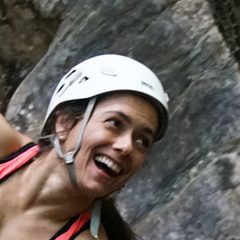
Twenty years after sending his first 9a route, Czech climber Adam Ondra keeps writing climbing history. And here's the curious part: at 33, an age when many people assume an athlete is starting to "go downhill", he is stacking up some of the best results of his career. What explains it? It isn't brute strength. The answer lies in experience, reading movement, and something every climber, from beginner to pro, can develop: body awareness.
A breathtaking 2026
To understand Ondra's moment, look at what he has done this year alone. For newcomers: in climbing, grades measure difficulty. On roped routes, the French scale goes from 3 to 9c; in bouldering (short blocks climbed without a rope, over crash pads), the scale goes up to 9A. Anything above 9a on a route or 8C on a boulder is territory for very few people on the planet.
February: in under two weeks, Ondra flashed (first try, but knowing the moves in advance) three 8C boulders in Switzerland and Austria — The Lion's Share, Celestite and Emotional Landscapes Sit. With Foundation's Edge, from November 2025, he became the only climber with four 8C flashes.
May: he established Big Twin (9a+) in the Dolomites in just three days of attempts.
October: he made the first repeat of Exodia, in Val Pellice (Italy), a boulder that Italian Elias Iagnemma needed 212 project days, over four years, to solve. Ondra needed four days and suggested a 9A grade.
November: he sent Huga Chaga (9b+) in Arco, also in Italy — his fifth 9b+ and his first at that grade in four years.
About Exodia, he was blunt: "I've probably never been in such good shape for a boulder problem like Exodia," he told Lacrux magazine. In June, a climbing podcast had already set the tone with its episode title: "stronger than ever at 33".
Video: Adam Ondra's YouTube channel — the first ascent of Big Twin (9a+), in the Dolomites.
Huga Chaga: a route with a family name
Huga Chaga has a lovely story. Ondra bolted the line in March 2022, in the Terra Promessa sector in Arco, one month before his son Hugo was born — hence the name. Then the project was set aside while he climbed other things. Four years later, with his wife Iva and his son at the base of the wall, he sent it.
The structure is brutal: a first 9a section up to a kneebar rest (the knee locked against the rock to rest the arms) and, right after, about 15 moves that on their own would be an 8C/8C+ boulder. Ondra found a new sequence for the crux, the hardest part of the route, which he described as "not necessarily easier, but cooler and less random". About the successful attempt, he celebrated: "My second attempt was pure joy, an epic battle I will never forget."
What happens to our muscles after 30
Here comes the part that matters to all of us. Science shows that the body does start to lose muscle mass from the late 20s and early 30s. A review published in 2012 in Frontiers in Physiology, which pooled dozens of studies, estimated a loss of about 0.4% to 0.5% of muscle mass per year, roughly 4% to 5% per decade from the peak. Strength drops even faster: two to five times faster than mass.
And there's an important detail: the fibers that suffer most over time are type II, the so-called fast-twitch fibers, responsible for explosive movements — jumps, dynamic moves, powerful pulls. Type I fibers, more resistant and linked to long efforts, are better preserved.
In other words: at 33 the loss is still small, and training can offset much of it. But if performance depended only on explosiveness, the natural trend would be to plateau or decline. That's not what we see in Ondra. So where does the difference come from?
Body awareness: the "muscle" that doesn't age as fast
In climbing, knowing where to place your foot, how to position your hips and when to relax your arm is worth as much as strong fingers. A 2017 scientific review published in Frontiers in Psychology by researchers who study movement in climbing showed that more skilled climbers move along more efficient paths on the wall, spend less time stationary and link moves more fluidly. They also "read" the route better: they spot faster which holds and positions work.
That is exactly what shows in Ondra's climbing. On Exodia, he used the same sequence as the first ascensionist, but swapped a foot swing for a "toehook" (the top of the foot hooked on a feature) and held some holds differently, adapting the movement to his own body. On Huga Chaga, he found a "less random" sequence. That is body awareness in practice: knowing your own body so well that each move uses only the energy it needs.
Twenty years of climbing at the highest level give him a huge repertoire of positions, sensations and solutions. Strength is still essential, of course, but efficiency makes more and more of a difference. A more experienced climber simply wastes less.
And what does this have to do with the mountains?
Everything. Whether on a rock route, on a trek like Serra Fina or on an Aconcagua expedition, the logic is the same: those who move with technique, rhythm and economy go further and more safely. In the high mountains, a badly placed step with crampons or a rushed climb costs energy you will miss up high.
The good news is that technique can be learned — at any age. Many people start climbing or mountaineering after 30, 40 or 50 and keep improving for years, precisely because skill gains more than make up for the natural loss of strength. That's what we aim for in Aventura Alpina's courses and trips: learning to move better, safely, and enjoying the process.
Want to feel it in practice? To start from scratch, Rock Climbing Course I teaches the basics of technique and safety. If you already climb, you can move on to Rock Climbing Course II or join a sport climbing trip to Arcos (MG) — Brazil's own "Arco" — or to Chapada Diamantina. And to climb Patagonian granite, there's climbing at Refugio Frey, in Bariloche.
If you want to take your first steps on rock, ice or high mountains, check out the trips and courses at aventuraalpina.com.br.
Sources
Desnivel — Adam Ondra propone su quinto 9b+ con "Huga Chaga" en Arco (11/12/2026)
PlanetGrimpe — Quatre ans après, Adam Ondra retrouve le 9b+ (11/12/2026)
Lacrux — Why Adam Ondra downgrades "Exodia" from 9A+ to 9A (10/22/2026)
Gripped — Adam Ondra makes 5.15a first ascent in the Dolomites (07/01/2026)
The Struggle Climbing Show — Adam Ondra: Stronger than Ever at 33 (06/17/2026)

About the author
Fabiane Perlatti is a mountaineer, an aerial silks instructor since 2015, a choreographer and the owner of Meru C3, a climbing, circus and theater school in Jundiaí (SP), Brazil. She has climbed in Argentina, Mexico and at many crags across Brazil.


Comments